
Oregon school spending based on students' race
Federal law prohibits racial discrimination; Oregon funds based on students' race
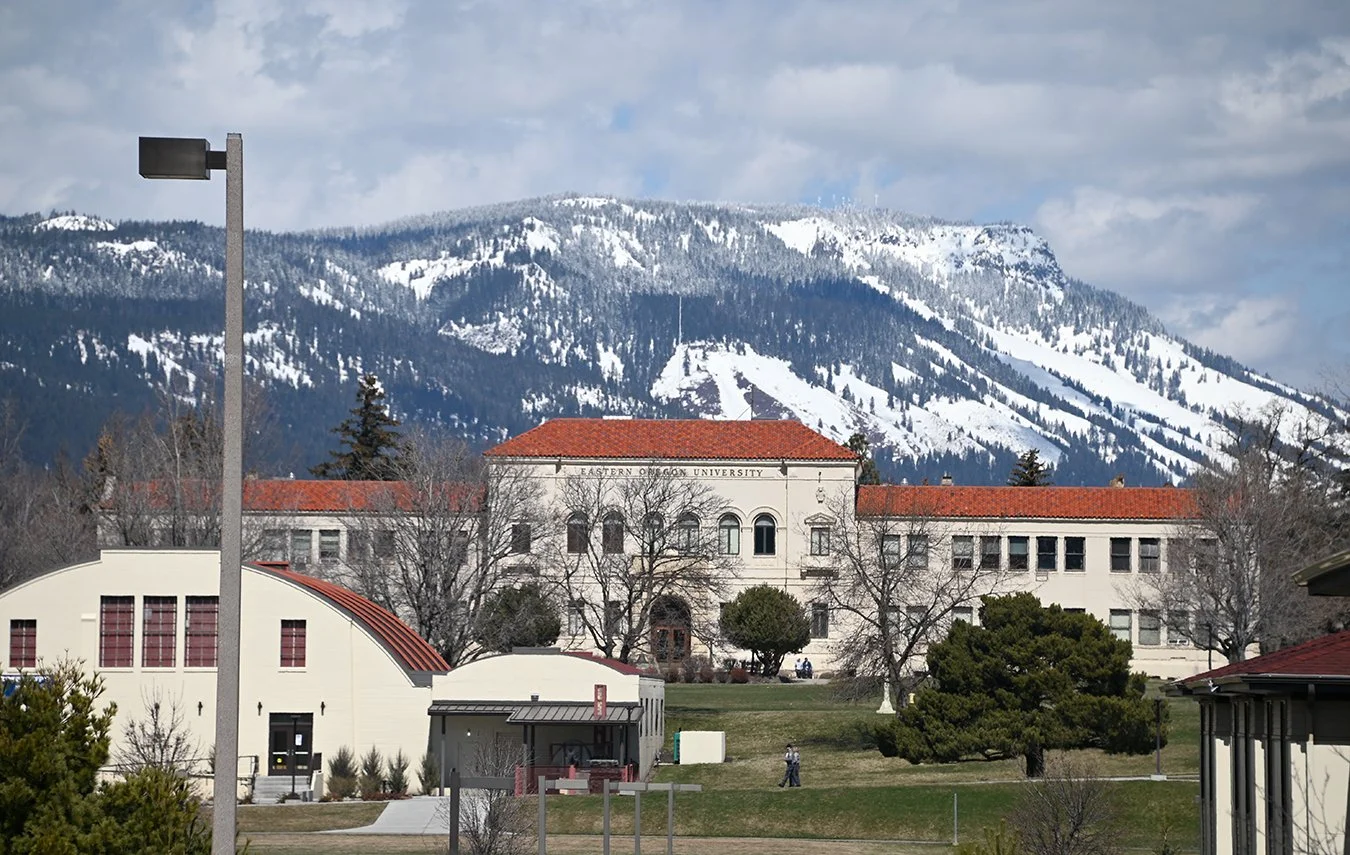
Eastern Oregon University in La Grande receives fewer state dollars than other state universities because it has fewer students belonging to state-preferred racial groups (photo courtesy EOU)
Oregon funds schools based on the race of their students – doling out millions of dollars based on “underrepresented racial/ethnic” enrollment.
The State of Oregon continues to distribute education funding based on race and ethnicity, Oregon Roundup Foundation has learned, through programs like the Student Success Completion Model, the Community College Support Fund, and Charter School Equity Grants.
This continues after the Supreme Court’s 2023 ruling in Students For Fair Admissions v. Harvard, which found discriminating against white and Asian applicants in favor of “underrepresented” applicants violates the 14th Amendment’s guarantee of equal protection.
As Oregon Roundup Foundation previously reported, the Oregon Department of Education refused in April 2025 to certify it follows the Civil Rights Act. And at least as recently as April 2025, Higher Education Coordinating Commission (HECC) Director Ben Cannon was reporting numbers of students by race to state legislators.
The FY 2025-2027 budget said while 37% of white residents completed a bachelor or graduate degree, only “about 20% of Oregonians who identify as Black, Hispanic, Native American, or Pacific Islander have done the same.”
“To meet Oregon’s statutory goals for this measure as well as for certificates and associates degrees (each 40%) will require doing better . . .,” the budget reads.
Universities: ‘Prioritized Populations’
Oregon’s HECC uses its $1.4 billion Public University Support Fund to bankroll the Student Success Completion Model, which awards schools for higher numbers of racially “underrepresented” students.
Specifically, bureaucrats distribute university funding based on factors like “students who identify as part of a traditionally underrepresented racial/ethnic group.” State rulemaking defines these students as “American Indian/Alaskan Native, Hispanic, Pacific Islander, Black, African American” – omitting white or Asian people.
Oregon officials use “outcomes-based funding” to award schools a 50-60% bonus for degrees earned by “underrepresented students.”
“Additional weight is provided for resident, undergraduate students who graduate and identify as being part of one or more prioritized populations,” state guidelines read. “This is an incentive to increase success and completion of prioritized students from these populations . . .”
In FY 2025, Oregon awarded state universities nearly $39.03 million – 15% of its “outcomes-based funding” – due to the number of “priority population” graduates.
The result: colleges and universities with higher numbers of students who identify as members of state-preferred racial groups receive more funding than colleges fewer of those students. For example, Portland State University reported more than 2,250 members such “populations,” so it received $13.06 million. Meanwhile, Eastern Oregon University only reported 255, so it received just less than $1.47 million.
Community Colleges: ‘Identified By Race/Ethnicity’
The commission also uses its $870.4 million Community College Support Fund to reward institutions for enrolling students from state-preferred racial groups.
In FY 2025-2027, the agency set aside $30 million for “student support” under this program. Specifically, this offered “funding for students from priority populations, including low-income, adults, underrepresented as identified by race/ethnicity, and Career and Technical Education/Workforce training.”
This funding explicitly supports “traditionally underrepresented students who have faced the highest barriers to success.”
Charter Schools: ‘Equity Grants’
The Oregon Department of Education uses “Charter School Equity Grants” to reward charter schools, public schools exempted from some state school rules, for higher numbers of students belonging to state-preferred racial groups.
To be eligible for these grants, a charter school must consider at least 65% of its students as “racial or ethnic groups that have historically experienced academic disparities.”
Specifically, state administrative rules say the quota must come from among the following groups: American Indian or Alaska Native, Black or African American, Hispanic and Latino, Native Hawaiian and Pacific Islander, and multiracial. The grants do not reward schools for teaching white or Asian students.
These grants are funded from the Statewide Education Initiatives Account from the Student Success Act, and the governor appropriated $4.3 million for FY 2025-2027. Officials expect the funding to continue at $4 million per biennium, with $2 million per “service level.”
Legal Challenges?
Oregon’s continues its use of racial criteria to award educational goodies in the face of federal law and civil rights enforcement efforts intended to end government discrimination based on race, in line with Title VI of the 1964 Civil Rights Act.
In 2022, the U.S. Supreme Court struck down racial preferences in college admissions in the landmark Students for Fair Admissions v. Harvard, citing the Civil Rights Act. Chief Justice John Roberts writing for the majority in that case, wrote, “Eliminating racial discrimination means eliminating all of it.”
In Kentucky, Jefferson County Public Schools used a “Racial Equity Analysis Protocol,” similar to Oregon’s “underrepresented” methodology, to push “racial balancing” in teaching, discipline, and administration. The U.S. Department of Education issued a warning to district officials in July 2025, saying they were violating Title VI of the Civil Rights Act, which bans racial discrimination.
The Department of Education ultimately demanded the district offer a clarification to parents, rescind guidance violating Title VI, and revise board policies.
ODE Strategic Communications Administrator Liz Merah told Oregon Roundup Foundation the agency follows state and federal law.
“The Oregon Department of Education has certified compliance with Title VI of the Civil Rights Act of 1964 and its implementing regulation,” Merah said. “We did so in connection with our most recent Every Student Succeeds Act Plan, which the U.S. Department of Education approved on October 25, 2023; the certification remains in effect.”
HECC Communications Director Endi Hartigan declined to comment, citing scheduling constraints.
Oregon Roundup Foundation created this article. ORF is a 501(c)(3) nonprofit corporation dedicated to covering Oregon political and government news. Media outlets are welcome to use this article for free with attribution of the author and Oregon Roundup Foundation.