
Kotek suit to hike power rates 6-7%
Gov. Tina Kotek caused Oregon to join a successful motion cutting dam power generation to benefit salmon; BPA says it will drive up the price of its power
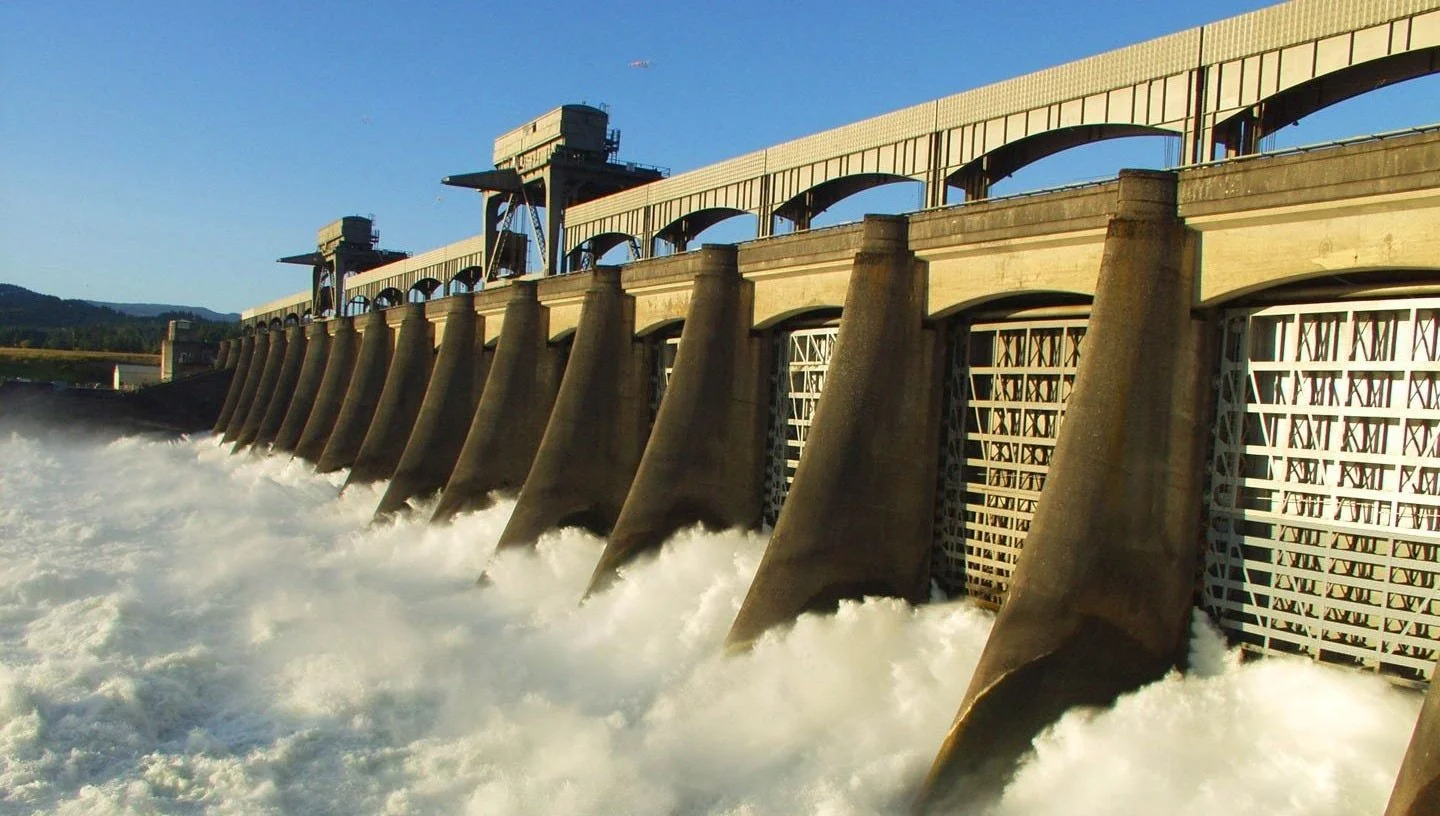
The Bonneville Dam on the Lower Columbia River (Photo courtesy Bonneville Power Administration)
A February order issued by U.S. District Court Judge Michael Simon, at the behest of the State of Oregon, environmental groups and Native American tribes, will increase the electricity rates charged to many Oregonians by six to seven percent (6 - 7%) over the next two years, according to Bonneville Power Administration spokesperson Kevin Wingert. Oregon Governor Tina Kotek hailed Simon’s decision as “the right call” that would have “modest impacts on power generation” in a press release.
Kotek caused the State of Oregon to join the motion to secure the order last fall after the Trump Administration withdrew from an agreement between the environmental groups, tribes and the Biden Administration that reduced power generation and studied removal of the Lower Snake River dams to increase river flows to benefit salmon species deemed threatened or endangered. Following the Trump Administration’s withdrawal from the agreement last September, Kotek said in a press release the state would “return to federal court and seek an injunction to address urgent needs of the fish[.]” The State of Oregon officially joined the lawsuit in October 2025.
The order requiring additional spill affects Bonneville, The Dalles, John Day and McNary dams on the Lower Columbia River, and Ice Harbor, Lower Monument, Little Goose and Lower Granite dams on the Lower Snake River.
Judge Simon’s order affects electricity rates for Pacific Northwest consumers because it requires the Army Corps of Engineers, which operates the dams, to divert more water through spillways rather than through electricity-generating turbines, reducing the electricity generated by the dams. The lawsuit plaintiffs, and Judge Simon, who is married to U.S. Rep. Suzanne Bonamici (D-OR), believe the extra spill will help juvenile salmon reach the ocean and prevent harm to species protected by the Endangered Species Act. The defendant federal agencies dispute that science, and contend additional spills drive up consumer costs with minimal benefit to fish.
BPA spokesperson Wingert told Oregon Roundup Foundation via email Judge Simon’s order will “need a $125 million surcharge per year over the next two years to fully recover the costs of the order within the current 3-year rate period. The $125 million roughly comports to a 6-7 percent increase in average rates” BPA charges utilities.
At least a portion of the BPA rate increase will directly impact consumers in the form of higher electricity bills. Most Oregonians use electricity generated by dams on the Columbia and Snake rivers, but the impact of the order on consumer rates will differ depending on the specific blend of power sources used, which varies by utility. Investor-owned utilities including Pacific Power and Portland General Electric use electricity generated by the dams in combination with other sources. Consumer-owned utilities, also known as cooperatives, in which the utility is owned by its customers, get almost all of their electricity from BPA. The customer-owners of consumer-owned utilities will feel the largest rate impact.
Major consumer-owned electric utilities in Oregon include the Eugene Water and Electric Board (98,000 customers), Central Lincoln PUD (37,000), Consumers Power Inc. (based in Philomath, 24,000), Central Electric Cooperative (Bend, 23,000), Columbia River PUD (Columbia County, 20,000) and Emerald People’s Utility District (rural Lane County, 20,000).
The Oregon Rural Electric Cooperative Association, which represents rural electrical co-ops that will feel the brunt of the rate impacts of Judge Simon’s order, recently undertook a public information campaign, complete with full-page newspaper ads around the state, about the causal relationship between Kotek’s decision to rejoin the dam spill litigation with increasing electricity rates.
“Oregon’s consumer-owned utilities are united in this effort because we believe collaboration is better than litigation – it’s the ‘Oregon Way’,” said ORECA Executive Director Ted Case. “Instead of saddling one million hard-working Oregonians with higher electric bills, we remain hopeful Governor Kotek will leave the courtroom and come to the table to seek common ground.”
Hydropower advocates, including ORECA, emphasize the carbon-free nature of the power source as Oregon seeks to reduce greenhouse gas emissions.
Between 2020 and 2024, Oregon's average residential electricity price increased roughly 30% according to the Oregon Department of Energy, while customers of the state's largest investor-owned utilities have experienced multiple successive rate hikes, including increases in both 2025 and 2026.
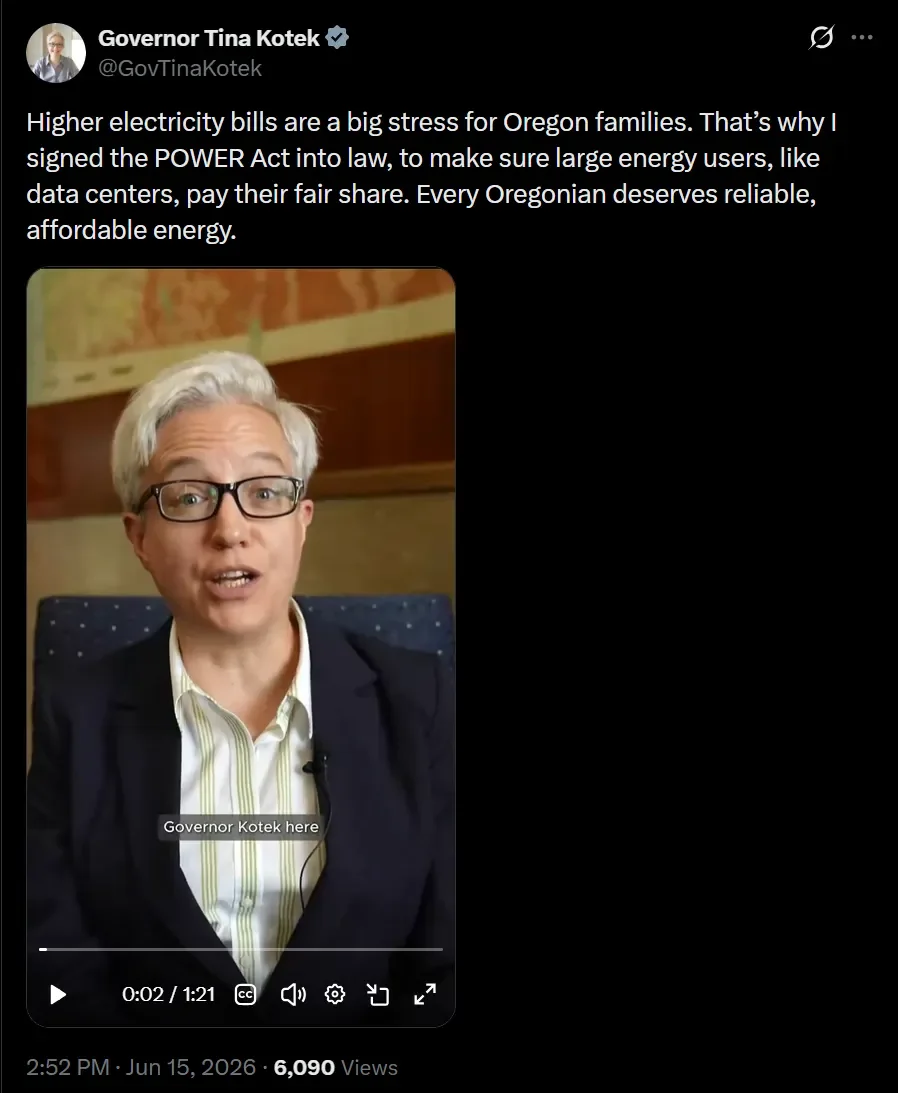
Meanwhile, Kotek is emphasizing affordability for cost-weary Oregonians as she runs for re-election against Republican Christine Drazan. On June 15, Kotek posted on the social media platform X, formerly known as Twitter, that “higher electricity bills are a big stress for Oregon families,” while promoting legislation she signed into law last year requiring utilities to enter into longterm contracts with large energy users, including data centers.
Kotek’s office did not respond to a request for comment for this story. The office has not responded to repeated requests for comment from Oregon Roundup Foundation on a range of issues since December 2024.
Oregon Roundup Foundation created this article. ORF is a 501(c)(3) nonprofit corporation dedicated to covering Oregon political and government news. Media outlets are welcome to use this article for free with attribution of the author and Oregon Roundup Foundation.